Liberty Chrysler Dodge Jeep RAM

Blog / Liberty CDJR Service

Tune-Up FAQ: Everything You Need to Know

Auto mechanic holding two wrenches in an automotive service center.
A tune-up is a routine maintenance service designed to keep your vehicle running at its best in Soda Springs, ID. If you've been searching for a Tune-Up FAQ to understand what this service actually involves, you're in the right place.
A basic tune-up typically includes inspecting and replacing worn components that affect engine performance, fuel efficiency, and reliability. Think of it as a check-in for your vehicle's overall health.

What Does a Tune-Up Include?

A car tune-up generally covers several key areas of your vehicle. Most services include replacing spark plugs, inspecting or replacing air filters, checking fuel filters, and reviewing ignition system components. A technician may also inspect belts, hoses, and fluid levels during the same visit.
The exact services can vary depending on your vehicle's age, make, model, and current mileage.

How Often Does My Car Need a Tune-Up?

The answer depends on your specific vehicle and the type of spark plugs it uses. Older vehicles with standard spark plugs may need a tune-up every 30,000 miles.
Newer vehicles equipped with long-life platinum or iridium spark plugs can often go 60,000 to 100,000 miles between services. Always check your owner's manual for the manufacturer's recommended interval.

What Are the Signs My Car Needs a Tune-Up?

Your vehicle will often give you warning signs before performance becomes a real problem. Common indicators include a rough idle, sluggish acceleration, poor fuel economy, difficulty starting, or a check engine light that stays on. If you notice any of these issues, it's a good time to schedule a car tune-up and have a qualified technician take a closer look.

Will a Tune-Up Improve My Fuel Economy?

It can, yes. Worn spark plugs, clogged air filters, and dirty fuel injectors can all cause your engine to work harder than it should, which can reduce fuel efficiency over time.
Replacing these components as part of a routine service can help restore proper combustion and improve overall performance. The improvement you notice will depend on how worn the parts were before the service.

Is a Tune-Up the Same as an Oil Change?

No, these are two different services. An oil change focuses specifically on replacing your engine oil and filter to keep internal components lubricated. A tune-up addresses ignition and engine performance components.
Both are important, and both should be part of your regular maintenance routine. In many cases, a technician will recommend scheduling them together for convenience.

Where Can Drivers in Soda Springs, ID Get a Tune-Up?

If you have more questions beyond this Tune-Up FAQ, the service team at Liberty Chrysler Dodge Jeep Ram is here to help. If your vehicle is due for a tune-up or you're simply not sure where to start, knowledgeable technicians can walk you through what your specific vehicle needs.
Drivers throughout Soda Springs, ID, can stop by Liberty CDJR or visit us online to schedule a service appointment or reach out with any questions.
Posted in:

Related Posts

A graphic featuring a mechanic and the text: Signs Your RAM Needs Differential Service Service - Liberty CDJR

Signs Your RAM Needs Differential Service

Have you noticed strange sounds, difficulty turning, or other changes in your vehicle's performance and handling? If so, these warning signs indicate that it's time to bring your vehicle to your Ram dealership for differential service. Service the Differential for Safe Driving All cars and trucks have a differential, which allows you to maneuver safely through turns. If the differential fails, you lose your ability to control your vehicle when turning, especially when driving at high speeds. For the safe operation of your truck, it's important to maintain and properly service your differential. This keeps you and your passengers safe by preventing a loss of control caused by a differential failure during a turn. Performing differential oil changes and repairs eliminates this worry and helps ensure your vehicle's safety. Warning Signs Indicating Differential Problems While it's important to check your owner's manual for the recommended intervals for differential servicing, that's not enough. You should also pay attention to the warning signs you see and hear when operating your vehicle. If you notice any of the warning signs below, be sure to bring your truck to the dealership so our technicians can find the cause of the problem. Shaking or Vibrating While Driving If your truck shakes or vibrates while driving, this could indicate a possible issue with the differential oil. When the oil is dirty, contaminated, or low, the differential will not lubricate properly, which causes parts to grind and can lead to failure. Unusual Sounds While Turning If you hear unusual sounds while turning, often a skipping or banging sound, there's a problem. Your truck should move through turning maneuvers smoothly and quietly. Odd Sounds at Higher Speeds If you notice odd sounds, such as rumbling, whirring, or howling at speeds over 15 mph, they are warning signs of a potential problem. A whirring noise as you reduce speed also indicates a possible problem. Differential Oil Color Change If a vehicle's differential oil has changed color, it's time to change the oil. Oil that is gray, dark brown, black, or translucent green should be drained and replaced. If you notice any of these warning signs, it's important that our technicians inspect your vehicle to determine if differential service is needed. Contact us today at Liberty Chrysler Dodge Jeep Ram in Montpelier, ID, to schedule an appointment. Image via

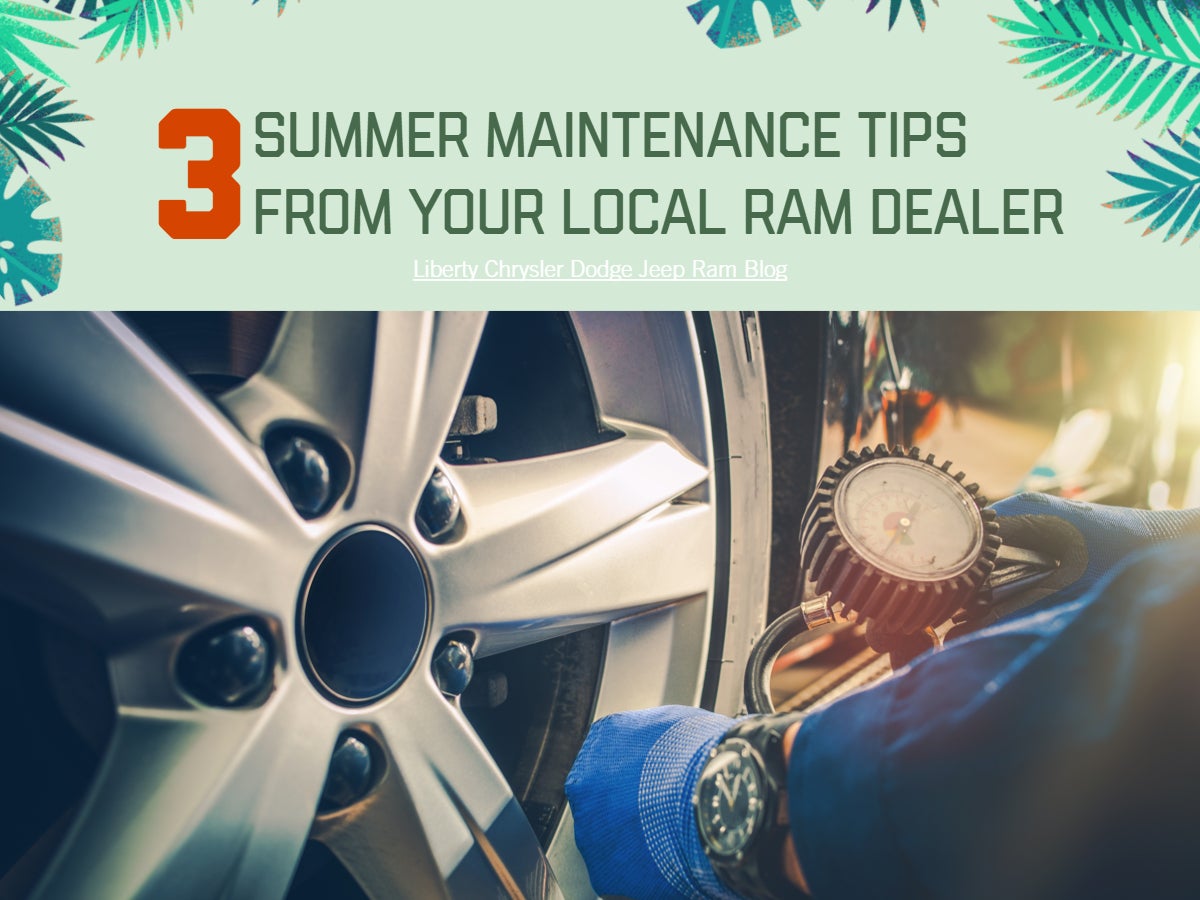
A graphic containing a photo of a car's tire pressure being checked and the text: 3 Summer Maintenance Tips from your Local RAM Dealer

3 Summer Maintenance Tips from your Local RAM Dealer

Regardless of the season, failing to maintain your truck can cost you a lot of time and money later on down the road. Whether you rely on your truck to perform your job or plan to take your partner on the road trip of their life, keep reading to discover three summer maintenance tips from your local RAM dealer. 1. Check Your Tire Pressure One of the most important maintenance steps to take this summer is checking your tire pressure regularly. As temperatures increase in July and August in the Montpelier area, so does the pressure in your RAM's tires. The air in your tires expands as the tires heat up; a blowout can occur if the tire is overinflated. It's also possible for underinflated tires to explode. 2. Have Your Engine Belts Inspected Another important step to take this summer is bringing your truck in for an inspection. Regardless of what you use your truck for, the motor works hard. To help ensure continuous powerful performance, have a certified RAM mechanic check your engine belts for normal wear and tear, cracks, and tears. The sooner a problem is detected and corrected, the more time and money you'll save down the road. Your engine belts may require replacement. 3. Check Your Cooling System A tire blowout isn't the only thing that can leave you stranded on the side of a hot road this summer. Your truck can also break down due to overheating. To mitigate this risk, check your cooling system's fluid levels and ratios. The most important fluid level to check is the coolant level. Coolant is the fluid that keeps your motor running at its optimal operating temperature. If your motor gets too hot, many things can happen. It may start shuddering and limping toward your destination. However, if it gets extremely hot, the high pressure from your overheated engine can crack your radiator. It's also possible for your engine to fail. Also, make sure there isn't too much water in your antifreeze. Your air conditioning won't work properly if your antifreeze is too watered down. Adhering to your truck's maintenance schedule this summer is crucial for helping it operate smoothly and safely. If it's been a few months since your truck was last serviced, book a service appointment at Liberty Chrysler Dodge Jeep Ram in Montpelier, ID. Image via

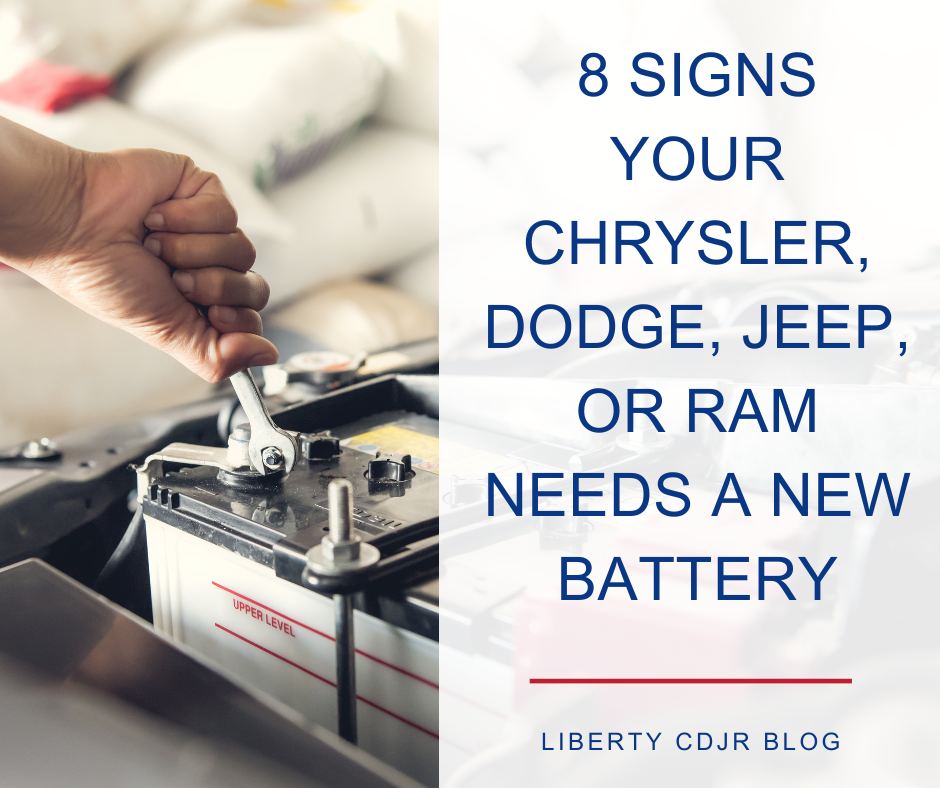
A photo of a car battery being repaired and the text: Does Your CDJR Vehicle Need a New Car Battery?

Does Your CDJR Vehicle Need a New Car Battery?

Your car's battery is a critical part, providing the power to start your engine and power electrical systems in your vehicle. Recognizing the warning signs that you need a new car battery from the RAM dealer can save you from the stress of a car that won't start. Warning Lights Most CDJR vehicles have a battery warning light on the dashboard. If this light comes on, it's a signal that the battery isn't charging properly and needs immediate attention. Slow Engine Crank Does this sound familiar? When you try to start your car, the engine cranks slowly, laboriously, or not at all. This sluggishness is often the first and most common sign of battery trouble. It means your battery is struggling to provide enough power to start the engine. Difficulty Starting in the Cold Maybe your car starts just fine unless the weather is extra cold. Extreme cold temperatures can take a toll on your battery's performance. If your car struggles to start in freezing temperatures, it's time to consider a battery replacement. Clicking When You Turn the Key If you hear a rapid clicking sound when you try to start your car instead of the engine roaring to life, your battery may not have the power your car needs. An Old Battery Car batteries are only expected to last about three to five years. If your car battery is in that age range, you should have it tested to see whether it needs to be replaced. Even if there are no other warning signs, an old battery is a red flag that you can expect trouble soon. Electrical Component Issues If you notice problems like dimming headlights, flickering cabin lights, or sluggish windows, it could indicate your battery is getting too weak to power the systems correctly. Corrosion on the Terminals Pop the hood and take a look at the battery. If you see a white, ashy substance on its metal parts, that means corrosion is present. Corroded battery terminals can prevent good electrical conduction, leading to poor battery performance. Carefully cleaning corrosion off of the terminals can temporarily improve matters, but corrosion is usually a sign of an aging, failing battery. Swollen Battery Case If your battery's case looks swollen or bloated, that's bad news. It has suffered internal damage and can pose a serious safety hazard. Swollen car batteries need to be replaced immediately. Get a New Car Battery at Your Local RAM Dealer If you recognize any of these signs, don't worry. A quick trip to the dealership can have you and your car back on the road with a brand-new battery in no time. Regular maintenance can help extend the life of your car battery. Call Liberty Chrysler Dodge Jeep RAM in Montpelier, ID, to schedule an inspection for your battery. Image via